Effortless Shanghai Metro Guide 2026: How to Ride the Subway, Maglev & More

Welcome to Shanghai. The city runs on one of the largest and most efficient metro systems in the world — 20 lines that spider out to nearly every corner, from ancient water towns to neon-lit skyscrapers. Whether it’s your first time in the city or you’re back for more, this Shanghai metro guide takes the guesswork out of getting around. By the time you finish reading, you’ll know exactly how to grab a map, pay for your ride, and glide through the city like you’ve been here for years.
Shanghai Metro Map & Key Lines for Tourists
Every good Shanghai metro guide starts with a map. Above, you’ll find the official Shanghai metro map for 2026. Save it to your phone, or pick up a free paper copy at any station service center. You can also download the latest Shanghai metro map PDF straight from the official Shanghai Metro website if you prefer having a high-resolution version offline. For real-time route planning, install the Metro Daduhui app — it has an English interface and works well once you’ve loaded the map. Apple Maps and Amap (Gaode) are also reliable if you download the city’s map ahead of time.
Once you study the map, these are the lines you’ll actually use. This Shanghai metro guide walks you through each one:
- Line 1 (red) – The north-south backbone. Shanghai Railway Station, People’s Square, Xujiahui, Shanghai South Station. Excellent for connections.
- Line 2 (light green) – The tourist lifeline. It crosses the city from east to west, linking Pudong International Airport and Hongqiu hub. Stops include Lujiazui (home to the Oriental Pearl Tower), Nanjing Road Pedestrian Street, People’s Square, Jing’an Temple, and the Bund area. You can transfer to 17 other lines along the way.
- Line 10 (light purple) – Old city charm meets modern lanes. Alight at Yu Garden, Xintiandi, Nanjing Road East, or Shanghai Jiao Tong University.
- Line 11 (brown) – This one goes straight to Shanghai Disneyland.
- Transfer hubs to remember: Longyang Road Station is the only five-way interchange in the city — Lines 2, 7, 16, 18, and the Maglev meet here.
Once you’ve spotted your route on the map, the next step is figuring out how to pay for the ride. A key part of any Shanghai metro guide is knowing which ticket fits your trip.
How to Ride the Shanghai Metro: Tickets, Cards & Apps
Understanding how to use Shanghai metro ticketing makes everything faster. There is a mix of old-school paper and modern phone taps — pick what feels easiest.
Single-Journey Tickets
Stations now issue a paper QR code ticket. Buy it at the self-service machine, then simply hold the printed QR code over the scanner at the gate. At your destination, scan the same code to exit — the ticket is not collected, so you can keep it as a souvenir. Machines accept 1-yuan coins, as well as 5, 10, and 20-yuan notes. Some larger stations also accept international credit cards like Visa and Mastercard. Keep the paper flat and clean; folded or damaged tickets may not scan.
Shanghai Metro Card (Public Transportation Card)
If there’s one piece of plastic that unlocks the city, it’s the Shanghai public transportation card. You can buy it at any metro service center or select self-service machines. Pay a 20-yuan refundable deposit (about 2.8 USD). Before leaving Shanghai, return the card at any metro service desk to get your deposit back. The card works on the metro, buses, ferries, the Maglev, and even some taxis. As a “China T-Union” card, it is also accepted in over 300 cities across the country. Many people simply call it the Shanghai metro card or Shanghai subway card.
Day Passes
If you plan to ride the metro multiple times in a day, this Shanghai metro guide recommends day passes: – 24-hour pass: 18 yuan (about 2.5 USD) – 72-hour pass: 45 yuan (about 6.25 USD) Both give unlimited rides on all metro lines (except the Maglev and new suburban lines opened after 2024). Buy them at any staffed service counter.
Mobile Payment & Apps
Alipay and WeChat now support international credit cards (Visa, Mastercard). After linking your card, open the “Shanghai Public Transport QR Code” inside the app and scan it at the gate. You can also use the Metro Daduhui app to generate a ride code with a foreign bank card. If your phone data acts up, having a physical Shanghai transport card tucked in your pocket is always a smart backup.
No matter which payment you choose, the steps for riding stay the same: security check (bags go through the scanner, liquids may be tested), tap or scan at the gate, follow bilingual signs to the correct platform, and tap or scan again to exit. Trains announce stops in both Chinese and English. Transferring between lines is free and doesn’t require exiting the station — just follow the signs.
Shanghai Maglev Train: Speed, Stations & Tickets
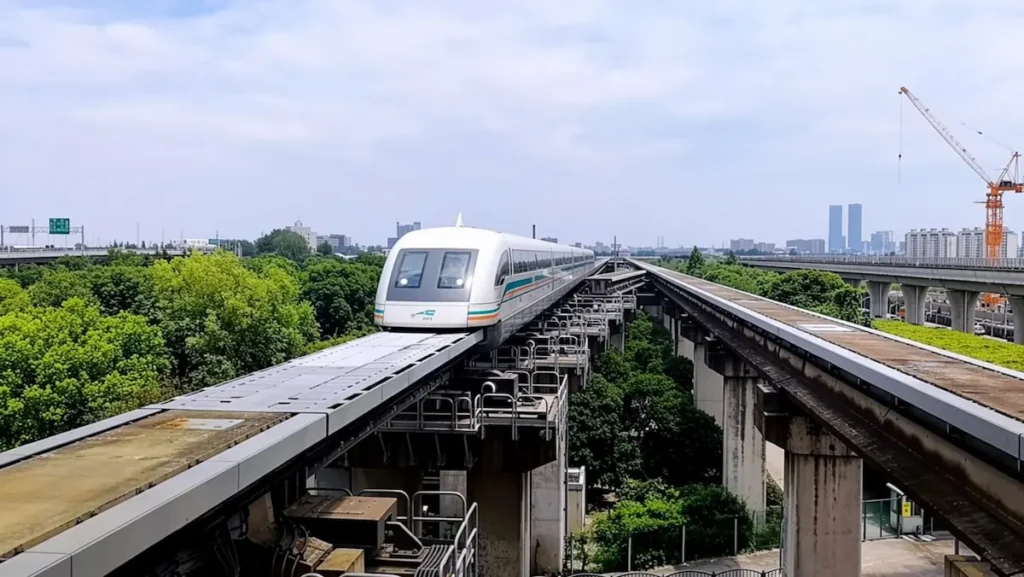
The Shanghai Maglev is a ride that feels like the future. Connecting Pudong International Airport to Longyang Road Station, this magnetic levitation train hits a top speed of 431 km/h (268 mph). The trip takes only about 8 minutes — a highlight of any Shanghai metro guide for first-time visitors.
Maglev train Shanghai tickets:
- Single ride: 50 yuan (about 6.9 USD). Show your same-day flight ticket or boarding pass and pay only 40 yuan (about 5.6 USD).
- Round trip: 80 yuan (about 11.1 USD).
You can pay with a Shanghai public transportation card directly at the gate, or buy tickets at the Maglev station counter. Services run approximately every 15–20 minutes, from around 6:45 am to 9:40 pm.
Longyang Road Station is where the Maglev kisses the metro network. From here, hop onto Line 2, 7, 16, or 18. Line 2 will carry you straight to Lujiazui, Nanjing Road East, and People’s Square without any further transfers.
From Pudong Airport to Shanghai City Center
The Maglev gives you that instant thrill, but there are other solid ways to get from Pudong Airport to city spots, depending on your budget and schedule. As this Shanghai metro guide shows, Line 2 is the budget-friendly warrior.
Metro Line 2 – A ride from Pudong Airport all the way to People’s Square costs around 7 yuan (about 0.97 USD) and takes roughly 60 minutes. The line now runs through without requiring a mid-way train change, so you can settle in and watch the city emerge from the window.
Taxi & ride-hailing – Meters start at 16 yuan (about 2.2 USD) for the first 3 kilometers, with each additional kilometer costing 2.7 yuan. Ride-hailing apps like DiDi often come in lower. A taxi to the Lujiazui or Bund area typically costs between 150–200 yuan (about 21–28 USD), but travel time depends heavily on traffic. During evening rush hour, the metro is usually faster.
If your trip involves both airports, the Airport Link Line (市域机场线) now runs between Hongqiao and Pudong, with services extending from around 5:45 am to 10:15 pm. Times change, so check the Metro Daduhui app for live schedules.
Other Public Transport: Buses, Ferries & Taxis

Shanghai public transport stretches far beyond the subway. Buses cover almost every street — most rides cost 2 yuan (about 0.28 USD), and you can tap your Shanghai metro card to pay. Announcements are mainly in Chinese, so keep your map app open to track your stop.
Ferries across the Huangpu River are not just transport, they’re tiny sightseeing cruises. The Dongjin Line, for example, connects the Bund and Lujiazui for 2 yuan (about 0.28 USD). You pay with the same card or QR code, then head to the upper deck for a view of Pudong’s towers. It’s also the perfect warm-up before booking a full Huangpu River cruise at night.
For short hops, shared bikes crowd every corner. Scan a Meituan or Hello Bike with Alipay or WeChat, ride to the next lane, and lock it. It’s the perfect way to bridge the gap between a metro station and a hidden courtyard café.
Essential Tips & Frequently Asked Questions
Before you tap your first gate, here are a few more practical answers to make this Shanghai metro guide even more useful.
How can I check the first and last train times?
Instead of memorizing timetables, let your phone do the work. Every station entrance and platform has a posted schedule, but the easiest method is to use the Metro Daduhui app (大都会) or the Suishenban (随申办) mini-program. Both show real-time departure information for any station. You can also bookmark the official timetables page on the Shanghai Metro website(Official Shanghai Metro Timetable). Because last-train times vary by line and direction, checking on the day of travel is always safer than relying on a static list.
Are there English signs and announcements?
Yes. All metro stations and trains have bilingual signage and audio announcements. Station staff can usually help with basic English, and having your destination written in Chinese characters always smooths things over.
What about rush hour?
Weekdays 7:00–9:00 am and 5:00–7:00 pm pack the trains. If you can, shift your rides just outside those windows — your shoulders will thank you.
How much is the Shanghai metro price?
Fares start at 3 yuan (about 0.42 USD) and increase with distance. Most inner-city rides fall between 3 and 6 yuan (about 0.42–0.83 USD). The long trip from Pudong Airport to People’s Square is around 7 yuan (about 0.97 USD). With a day pass, you ignore all this math and just go.
How can I plan beyond the metro?
For deeper trip planning, browse our Shanghai travel guide. You’ll find itineraries, food walks, and neighborhood guides that pair perfectly with everything you’ve just learned about getting around.
A little preparation makes all the difference. Download your map, grab a card or activate your phone code, and step into the clean, punctual heart of the city. We hope this Shanghai metro guide helps you travel with confidence. The train won’t wait — but now you know exactly how to catch it.
This guide can become your real trip
Instead of piecing everything together alone, let me and our team build your perfect Shanghai itinerary — from the Bund at sunrise to the best soup dumplings in town.
📋 Plan My Shanghai Trip