
Unmissable City God Temple of Shanghai: Your Guide to Old Shanghai’s Soul
- What to Expect: A Quick Glance
- The Legend of the "Three City Gods" at the Temple
- What to See and Do: Core Experiences at the City God Temple of Shanghai
- Plan Your Visit: Practical Tips for the City God Temple of Shanghai
- Suggested Itineraries Featuring the City God Temple of Shanghai
- A Few Things to Keep in Mind When Visiting the City God Temple of Shanghai
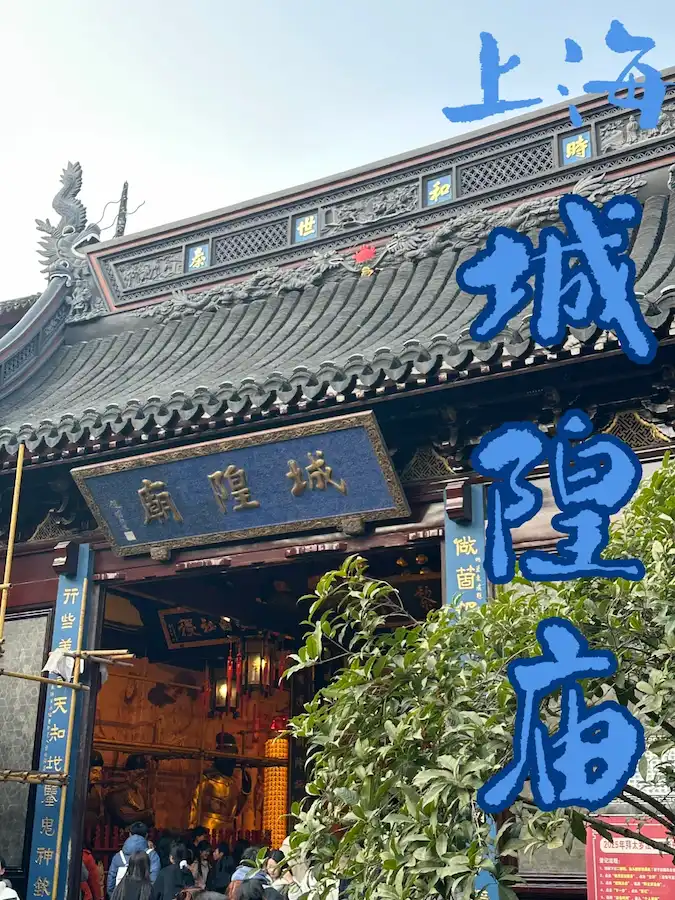
Walking into the City God Temple of Shanghai feels like stepping onto a movie set. One minute you’re in a modern metropolis; the next, you’re surrounded by ancient red walls, the smell of incense, and the buzz of a thousand conversations in a centuries-old marketplace. This isn’t just a temple; it’s the vibrant, beating heart of Old Shanghai’s folk culture, history, and food scene. As a local saying goes, “One who fails to reach the temple never reaches Shanghai.” Ready to truly discover the city? If you are short on time, you can easily combine this with a half day city tour shanghai.
What to Expect: A Quick Glance
Before you dive in, here’s the practical info you need to plan your visit to this fascinating Taoist complex known as the City God Temple of Shanghai.
Type of Attraction: A mix of active religious site (Taoist), historical architecture, and a massive pedestrian food and shopping district.
Best Time to Visit: Year-round. Spring (March-May) and Autumn (September-November) offer the most comfortable weather. Visit during Chinese New Year (Jan/Feb) for an epic Lantern Festival, but be prepared for massive crowds.
Suggested Duration: Spend 2-3 hours here. You could easily stretch it to a half-day if you’re big on photos or plan to sit for tea.
Opening Hours :
Regular Hours: 8:30 AM – 4:30 PM (Oct 1 to Apr 30) | 9:00 AM – 5:00 PM (May 1 to Sep 30).
Special Hours: On the 1st and 15th of the lunar month, it opens early at 6:00 AM.
Ticket Price: ¥10 CNY (about $1.40 USD) per person. This includes three complimentary sticks of incense.
Address: 249 Fangbang Middle Road, Huangpu District, Shanghai.
The Legend of the “Three City Gods” at the Temple
So, what’s a City God? In Chinese tradition, it’s the guardian deity of a town, responsible for protecting its people and keeping the spiritual peace. The word itself combines “city” (the walls) and “moat” (the water around them).
What makes the City God Temple of Shanghai truly unique is that it’s known as “One Temple, Three City Gods.” It honors three different historical figures who watch over Shanghai:
Huo Guang: A powerful Western Han Dynasty general, he was the first god enshrined here and is seen as a protector against natural disasters.
Qin Yubo: A Yuan Dynasty scholar famous for his filial piety and integrity. Legend says the first Ming emperor, frustrated that Qin wouldn’t serve him in life, declared he must serve as the city’s guardian in death.
Chen Huacheng: A Qing Dynasty general who became a national hero bravely resisting British forces during the First Opium War. He was later deified for his sacrifice.
The buildings you see today, with their red walls, black tiles, and dramatically upturned eaves, are classic examples of Ming Dynasty Jiangnan architecture. This historical depth makes it one of the top Shanghai hidden gems for history buffs.
What to See and Do: Core Experiences at the City God Temple of Shanghai
You could easily spend a full afternoon wandering the temple and the bustling bazaar surrounding it. Visiting this site is a highlight of any shanghai itinerary 5 days.
Key Spots You Can’t Miss
The Nine-Turn Bridge: This zigzag bridge over the lotus pond isn’t just for looks. In Chinese culture, walking its twists and turns is believed to ward off evil spirits and leave your troubles behind. It’s especially magical after 6:30 PM when the lanterns are lit.
Mid-Lake Pavilion: Sitting right in the middle of the bridge, this is Shanghai’s oldest teahouse. Do yourself a favor: go upstairs, order a pot of jasmine tea, and just watch the world go by for an hour. It’s pure relaxation.
Yuyuan Bazaar / Old Street: This is the lively, maze-like commercial area wrapped around the City God Temple of Shanghai. It’s packed with shops in restored ancient buildings, selling everything from tea to pearls.
Inside the Temple: A Walking Route
Once you enter the temple grounds, follow this path to hit the highlights:
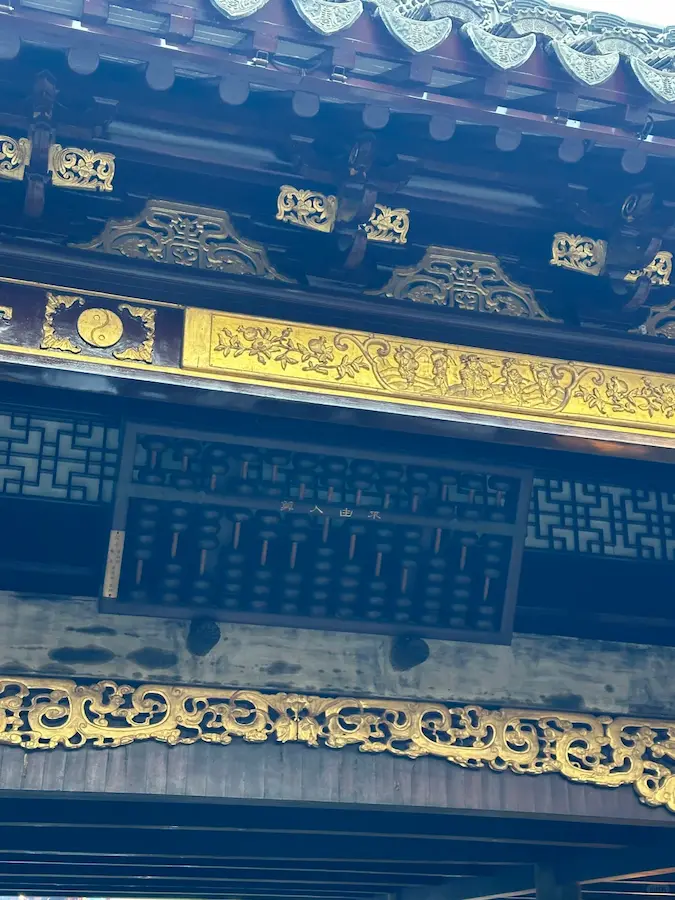
Entrance & The “No Escape from Heaven’s Justice” Abacus: As you pass through the second gate, look up! You’ll see a giant abacus hanging overhead with the words “No Escape from Heaven’s Justice.” It’s a powerful reminder that you can’t scheme your way past fate or divine justice.
Main Hall: The first major hall, dedicated to General Huo Guang. Notice the two figures flanking him: the white-faced Civil Judge (recording good deeds) and the black-faced Military Judge (recording bad deeds).
Tai Sui Hall: This hall houses 60 life-sized statues, each representing a god who oversees a year in the Chinese zodiac. Find your birth year and pay your respects!
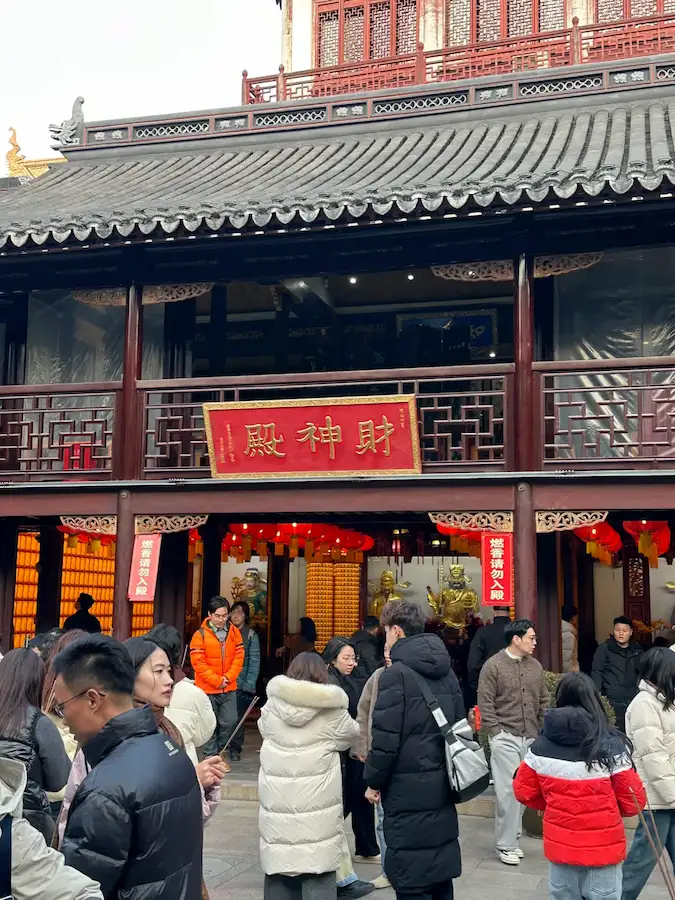
God of Wealth Hall: Easily the most crowded and smoke-filled spot in the City God Temple of Shanghai. This is where people come to pray for prosperity. If you’re hoping for a financial boost, this is your stop.
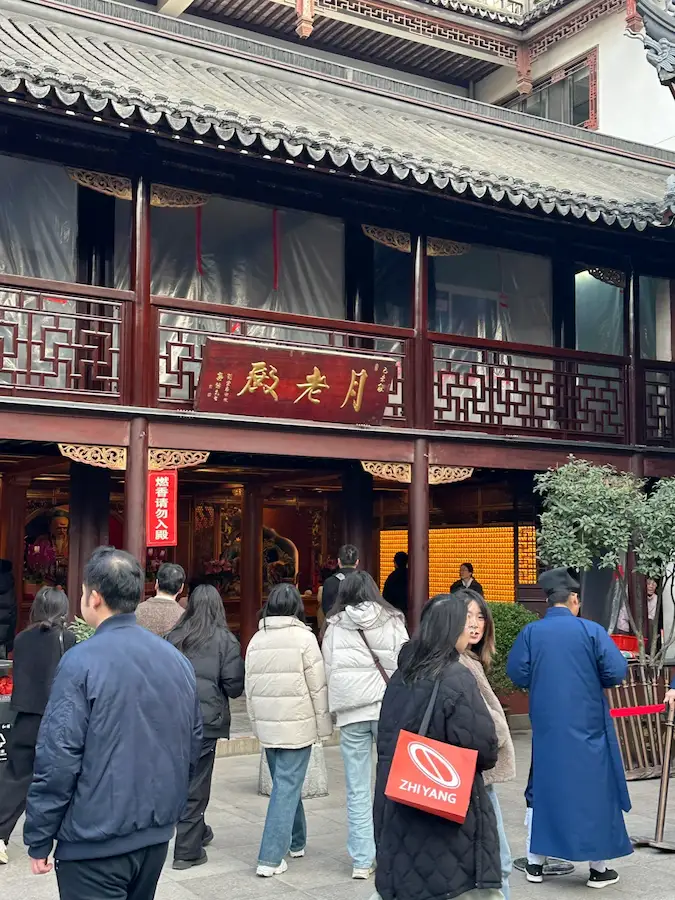
Old Man Under the Moon Hall: A must-visit for singles! This is the god of matchmaking and love. The atmosphere here is always hopeful and sweet.
City God Hall: The spiritual heart of the complex. This hall enshrines the main City God, Qin Yubo, in a setting that mimics a Ming Dynasty official’s court. It feels solemn and deeply historical.
Don’t Miss the Festivals
Lantern Festival: For about two weeks around the 15th day of the first lunar month, the entire area explodes with massive, intricate lantern displays. It’s chaotic, crowded, and absolutely unforgettable.
1st and 15th of the Lunar Month: On these days, the City God Temple of Shanghai fills with local devotees coming to burn incense. It’s the best time to witness the authentic religious atmosphere.
Where to Eat Near the City God Temple of Shanghai
The area around the City God Temple of Shanghai is famous for its food. But skip the generic snack stalls in the main square. Head to the historic eateries instead. This is the perfect place to try authentic shanghai street food.
Nanxiang Steamed Bun Restaurant: The place for authentic crab roe soup dumplings. The broth is incredible. Be prepared to wait in line—it’s always long. (Budget ~¥50-80 / $7-11 USD per person).
Lu Bo Lang: A beautiful, state banquet-level restaurant. Try the osmanthus flower cake and other delicate dim sum. It’s pricier but worth the experience. (Budget ~¥150+ / $21+ USD).
Ningbo Tangtuan Shop: A local favorite for sweet black sesame rice balls. They are soft, warm, and the perfect comfort snack. (Budget ~¥20-30 / $3-4 USD).
Songyuelou: A historic vegetarian restaurant. Even meat-lovers rave about their vegetarian buns. A great, affordable option. (Budget ~¥40-60 / $5.50-8 USD).
Da Hu Chun: For a taste of old-school Shanghai pan-fried pork buns, this is the spot. Their buns have a thick, fluffy dough and a crispy bottom—different from the soupy version you find elsewhere.
Exploring the Neighborhood Around the Temple
The City God Temple of Shanghai sits right in the middle of other great sights, making it easy to build a full day of exploring. It’s a fantastic stop on any general shanghai tour.
Yu Garden: It’s literally next door (less than a 2-minute walk). This exquisite classical Chinese garden was built in the Ming Dynasty. Don’t miss the famous Exquisite Jade Rock and the dramatic Dragon Walls. (Tickets: ¥30-40 / $4-5.50 USD. Closed Mondays).
Shanghai Old Street: This street connects the City God Temple of Shanghai to the rest of the old town. It’s lined with shops selling tea, calligraphy brushes, and traditional crafts, offering a glimpse into Shanghai’s old commercial district.
Plan Your Visit: Practical Tips for the City God Temple of Shanghai
How to Get There
Subway (Best Option): Take Line 10 or 14 to Yuyuan Station. Use Exit 3 or 7 for the main entrance to the temple area. It’s about a 5-8 minute walk.
Car/Taxi: Driving is highly discouraged. The narrow streets in the old city are perpetually jammed, and parking is a nightmare. If you must taxi, have the driver drop you off as close to the pedestrian zone as possible.
Getting Around Inside
Walking: This is a pedestrian zone. Comfortable shoes are your most important piece of gear.
Where to Stay
Staying in Huangpu District is your best bet.
Budget-Friendly: Hotels like the Atour Hotel or Ji Hotel near People’s Square are clean, reliable, and a short subway ride away. (Rates from ~¥400-500 / $55-70 USD).
Splurge: The Renaissance Shanghai Yu Garden Hotel offers rooms with direct views over the temple’s rooftops.
Suggested Itineraries Featuring the City God Temple of Shanghai
Half-Day Classic (3-4 hours):
9:00 AM: Arrive and tour the City God Temple of Shanghai (1 hr).
10:00 AM: Stroll the Nine-Turn Bridge and enjoy a relaxing tea at the Mid-Lake Pavilion (1 hr).
11:00 AM: Hunt down a snack or an early lunch at Nanxiang or Lu Bo Lang (1 hr).
12:00 PM: Browse the Yuyuan Bazaar and pick up some souvenirs like five-spice beans or pear syrup candy.
Full-Day Deep Dive (Connect the Dots):
Morning: Follow the half-day itinerary, but add a 2-hour visit to Yu Garden.
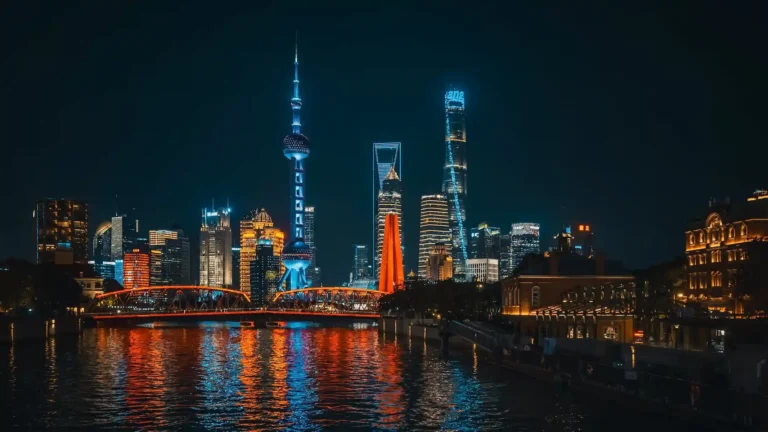
Afternoon: Walk through Shanghai Old Street (about 15-20 mins) all the way to The Bund. Stroll along the Huangpu River and soak in the view of the skyscrapers.
Evening: If you have energy, it’s a short walk or one-stop metro ride to the neon lights of Nanjing Road Pedestrian Street.
A Few Things to Keep in Mind When Visiting the City God Temple of Shanghai
Mind Your Manners: Don’t step on the high wooden thresholds in the temple. Men usually step over with the left foot first, women with the right. Keep your voice down inside the halls.
The Crowds Are Real: The City God Temple of Shanghai is almost always packed. For photos with fewer people, come right when it opens (8:30 AM) or after 6:00 PM for the night lights.
Shop Smart: Those brightly colored “Shanghai specialty” candies in the main stalls are often overpriced and mediocre. For authentic food gifts, stick to the long-established brands like Shen Da Cheng or Lao Da Fang.
Watch Your Valuables: As with any super popular tourist spot, be mindful of your phone and wallet in the crowds.
After a day of wandering through centuries of history, past incense smoke and sizzling dumplings, watching the lanterns reflect off the Nine-Turn Bridge, you’ll understand why this place isn’t just a stop on a tour—it’s the feeling of old Shanghai itself. Go get lost in it.

One Comment