Discover Inner Peace at the Jade Buddha Temple Shanghai China: A Local’s Guide
- A Quick Peek: What You Need to Know Before You Go to the Jade Buddha Temple Shanghai China
- A Story Carved in Jade: The History of the Jade Buddha Temple Shanghai China
- Wandering the Halls: What to See at This Sacred Site
- A Moment of Playfulness: The "Great Orange" Cat Courtyard
- The Famous Vegetarian Restaurant
- Slow Down with Tea or Sutra Copying
- Stepping Beyond the Temple Walls: Exploring the Neighborhood
- An Artistic Contrast: M50 Creative Park
- Local Life & Shopping
- Getting There & Handy Tips for Your Visit
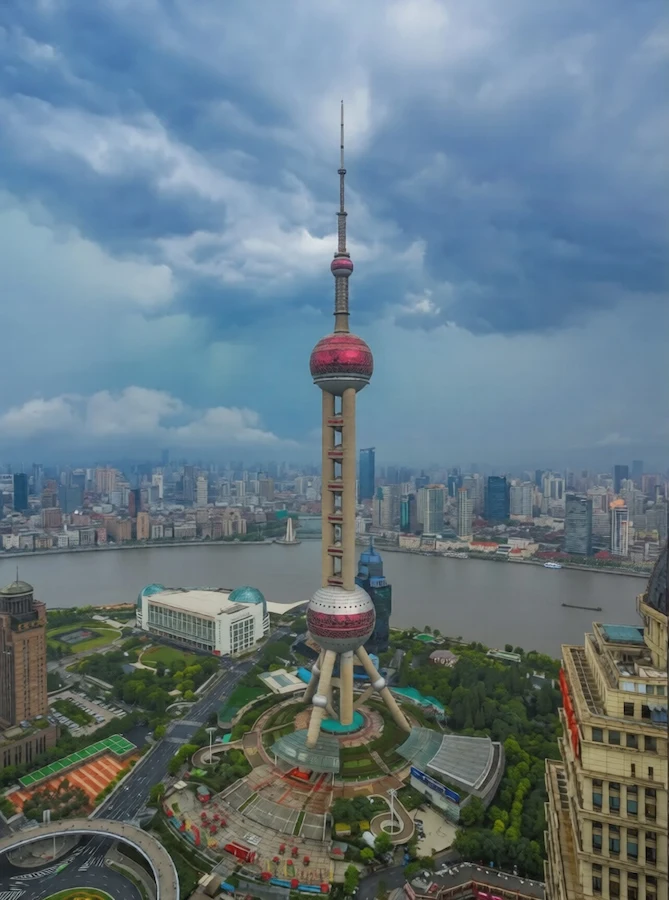
Tucked away from the bustling streets of Putuo District, the Jade Buddha Temple Shanghai China offers a serene escape and a genuine glimpse into living Buddhist culture. If you are planning your overall shanghai travel, this destination provides a perfect contrast to the city’s futuristic skyscrapers. This active monastery invites you to slow down, breathe in the scent of incense, and witness centuries-old traditions firsthand. It’s a place where history, spirituality, and even a few furry residents come together in the heart of the metropolis.
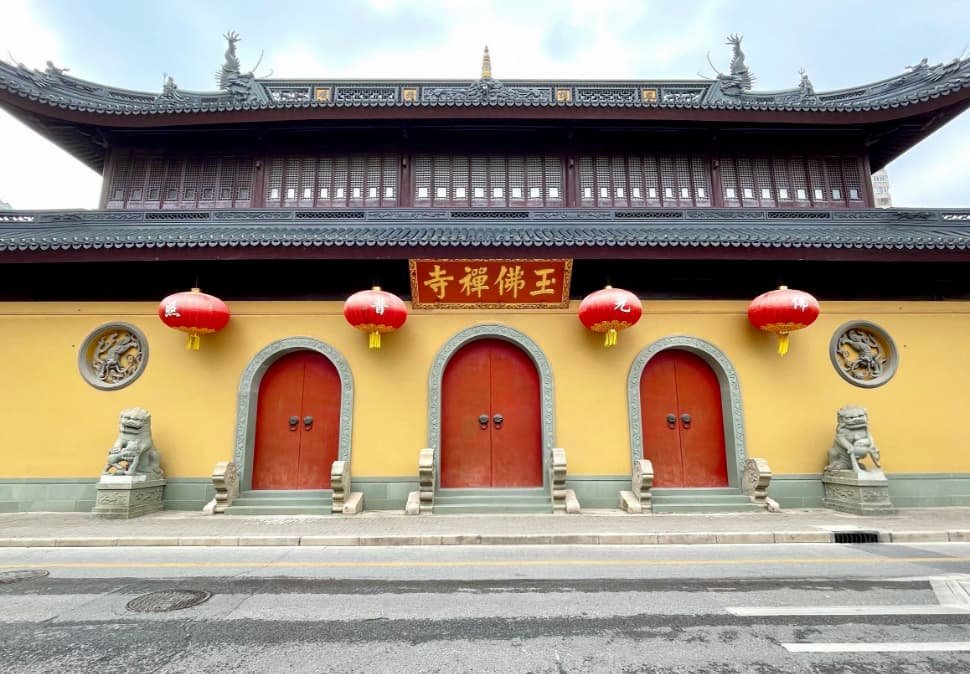
A Quick Peek: What You Need to Know Before You Go to the Jade Buddha Temple Shanghai China
Before you head out, here’s the essential info to plan your visit to this spiritual sanctuary. Understanding these details will help you appreciate why the Jade Buddha Temple Shanghai China is considered a must-see by locals.
Type: Active Buddhist Monastery & Historical Site
Best Time to Visit: Any time of year! Spring (March-May) and Autumn (Sept-Nov) offer the most pleasant weather for wandering the courtyards.
Suggested Duration: 1.5 to 2.5 hours
Opening Hours:
Regular Days: 8:00 am – 4:30 pm (Last entry at 4:00 pm)
1st & 15th of Lunar Month (Incense Days): 7:00 am – 4:30 pm
Tip: It’s always a good idea to double-check their official social channels for holiday schedule changes.
Ticket Price: Entry is ¥20 (approx. $2.75) . An additional ¥10 (approx. $1.40) is required to enter the Jade Buddha Building to see the main seated Buddha up close .
Address: No. 170, Anyuan Road, Putuo District, Shanghai
A Story Carved in Jade: The History of the Jade Buddha Temple Shanghai China
The story of the Jade Buddha Temple Shanghai China begins in 1882 with a monk named Huigen. During a pilgrimage to India, he passed through Myanmar (Burma), where he was captivated by the beautiful local jade. With donations from overseas Chinese, he commissioned five statues of the Buddha carved from single blocks of this precious stone .
On his way back to China, two of the statues—a seated and a reclining Buddha—were left in Shanghai due to transportation difficulties. A small temple was built to house them, but sadly, it was destroyed during the turmoil following the 1911 Revolution . Fortunately, the precious jade statues survived. A new temple, the one you see today, was constructed at the current location on Anyuan Road between 1918 and 1928, designed in the grand style of the Song Dynasty .
Wandering the Halls: What to See at This Sacred Site
The temple’s layout follows a traditional Chinese axis, making it easy to navigate from the southern entrance straight through to the north. As you walk through the peaceful courtyards, here’s what you can’t miss:
The Grand Hall (Mahavira Hall)
This is the main hall of worship, an imposing structure with double-eaved roofs. Inside, you’ll find three magnificent golden Buddha statues: Sakyamuni (the historical Buddha) in the center, flanked by Bhaisajyaguru (the Medicine Buddha) and Amitabha. Take a moment to appreciate the intricate carvings and the serene atmosphere .
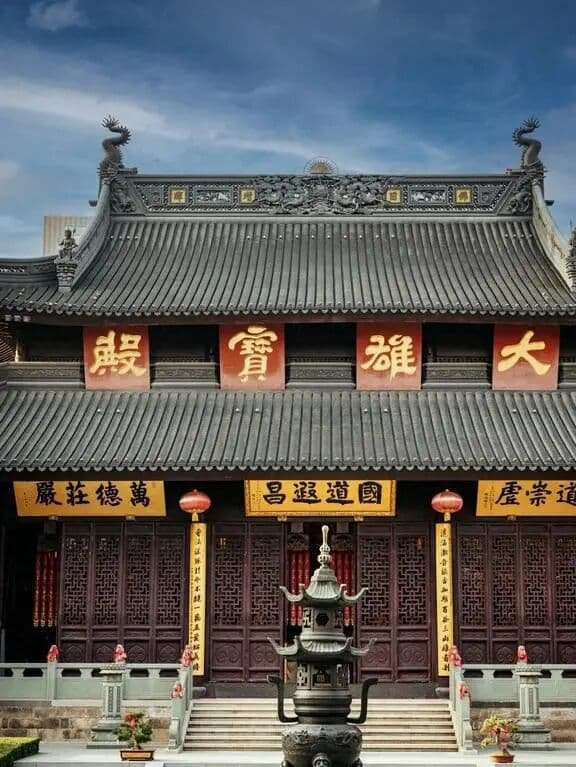
The Star Attraction: The Jade Buddha Building
This is the absolute heart of your visit. Upstairs, housed in a beautifully decorated chamber, is the temple’s namesake: a 1.92-meter-tall seated Buddha. Carved from a single, massive piece of translucent white jade, the statue’s serene expression is breathtaking. It depicts the Buddha at the moment of his enlightenment. This is the very statue that gives the Jade Buddha Temple Shanghai China its world-wide fame. The statue is adorned with gems, and the room itself is designed with mirrors to create an illusion of infinite space, representing the Buddhist concept of a boundless universe .
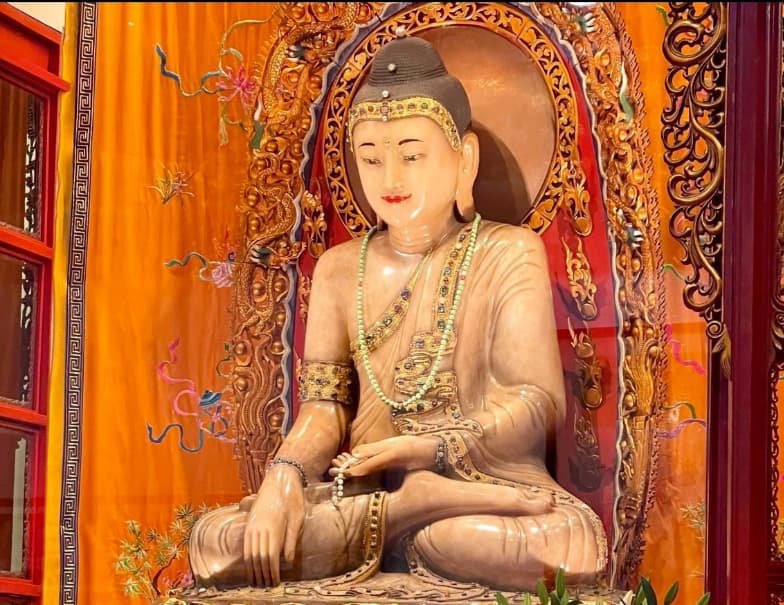
Note: Photography is strictly prohibited here, so just soak it all in with your own eyes .
The Hall of the Reclining Buddha
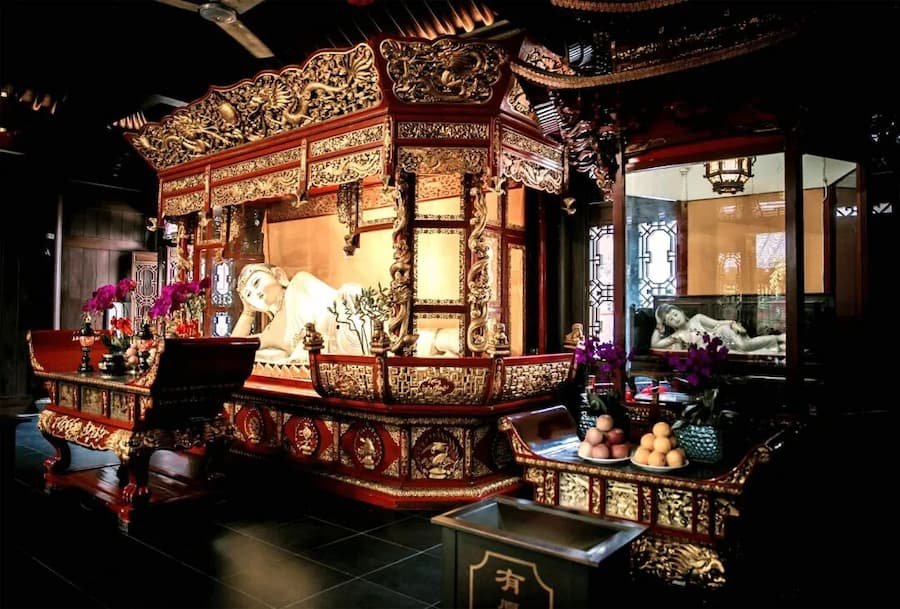
This hall houses two important statues. The smaller, older one (about 96 cm) is the original brought from Myanmar by Master Huigen. It shows Buddha entering Nirvana at the end of his life, lying peacefully on his side. A much larger, 4-meter-long reclining Buddha, donated from Singapore in 1989, also rests here .
A Moment of Playfulness: The “Great Orange” Cat Courtyard
In recent years, the temple has gained a new, heartwarming attraction. Tucked away in a quiet corner (follow the signs for “Orange House”), you’ll find a small courtyard dedicated to caring for the temple’s community of stray cats. The most famous resident is a chill, orange tabby nicknamed “Great Orange” who has become a bit of an internet celebrity. Spotting him lounging peacefully among the ancient walls adds a unique touch of warmth to your visit.
Taste the Tradition: Food & Unique Experiences at the Temple
After you’ve explored the halls, your senses will likely guide you to other experiences within the temple grounds. Spending time here truly feels like a half day city tour shanghai focused on culture and calm.
The Famous Vegetarian Restaurant
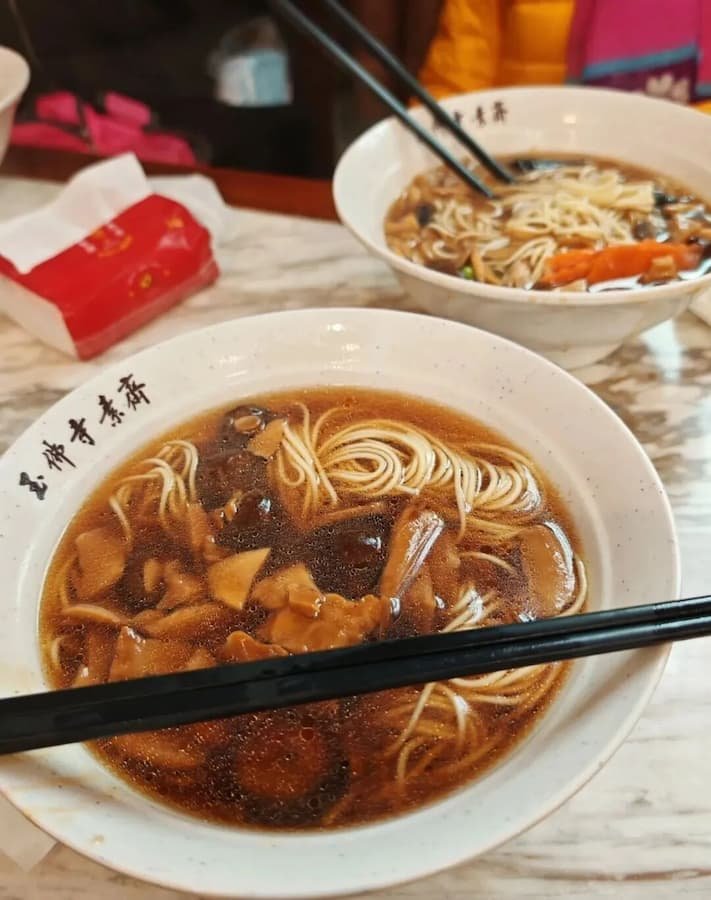
A visit isn’t complete without a meal at the temple’s renowned vegetarian restaurant. Run by the temple, it’s a culinary experience in itself. Don’t expect just plain veggies—they create incredible mock meats from tofu, mushrooms, and gluten, with dishes named things like “sweet and sour pork” or “roast chicken,” all completely meat-free. A simple but flavorful bowl of noodles will cost around ¥25-50 ($3.50-$7) , while a full sit-down meal in the upstairs dining room can be around ¥80-150 ($11-$20) per person . The entrance to the restaurant is at 1268 Shaanxi North Road, slightly north of the main temple gate .
Slow Down with Tea or Sutra Copying
For a truly mindful experience, check out the Zhiyue Zen Tea house, where you can enjoy a quiet pot of tea in a traditional setting. Alternatively, the temple often offers free sutra copying sessions. Sitting at a low table, slowly tracing ancient Chinese characters with a brush is an incredibly meditative practice. Note: This usually requires advance booking and is often paused during Chinese New Year week.
Stepping Beyond the Temple Walls: Exploring the Neighborhood
Once you’ve had your fill of tranquility, the vibrant city awaits just outside. The temple’s location is perfect for extending your exploration.
An Artistic Contrast: M50 Creative Park
Just a 10-minute taxi or short walk away (about 1 km) is the M50 Creative Park. Housed in a former textile factory complex, this edgy art district is filled with contemporary galleries, avant-garde studios, and cool cafes . It’s the perfect place to see Shanghai’s modern, creative energy.
Local Life & Shopping
Walk about 10-15 minutes south, and you’ll hit the bustling Changshou Road commercial strip. Here, you’ll find shopping malls like Paris Spring, supermarkets, and countless local eateries and bubble tea shops—a great spot to see how Shanghainese people spend their weekends. If you are looking for the best food tour shanghai has to offer, you will find plenty of delicious options in this lively neighborhood.
Getting There & Handy Tips for Your Visit
Metro is Best: Take Line 13 to Jiangning Road Station. Use Exit 3 or 4 and walk south for about 5-8 minutes. Line 7 to Changshou Road Station is also an option (a 10-12 minute walk) .
Avoid Driving: Seriously, don’t drive. The temple has no parking, and the surrounding streets are narrow and congested.
Dress Respectfully: As this is an active place of worship, avoid very short skirts/shorts or revealing tops.
Free Incense: You’ll receive three free sticks of incense with your ticket. You can light them and make a wish at the large incense burner in the main courtyard, but don’t take lit incense inside the halls.
Walking out of the Jade Buddha Temple Shanghai China, past the monks in their grey robes and the faithful lighting incense, you carry a piece of that profound stillness with you. Later, you might consider seeing the city lights from the water on a huangpu river cruise shanghai, or perhaps a shanghai night tour to see a different side of the metropolis. But for now, the quiet calm from the temple stays with you—long after you’ve returned to the rhythm of the city.